

By Sharon Lee
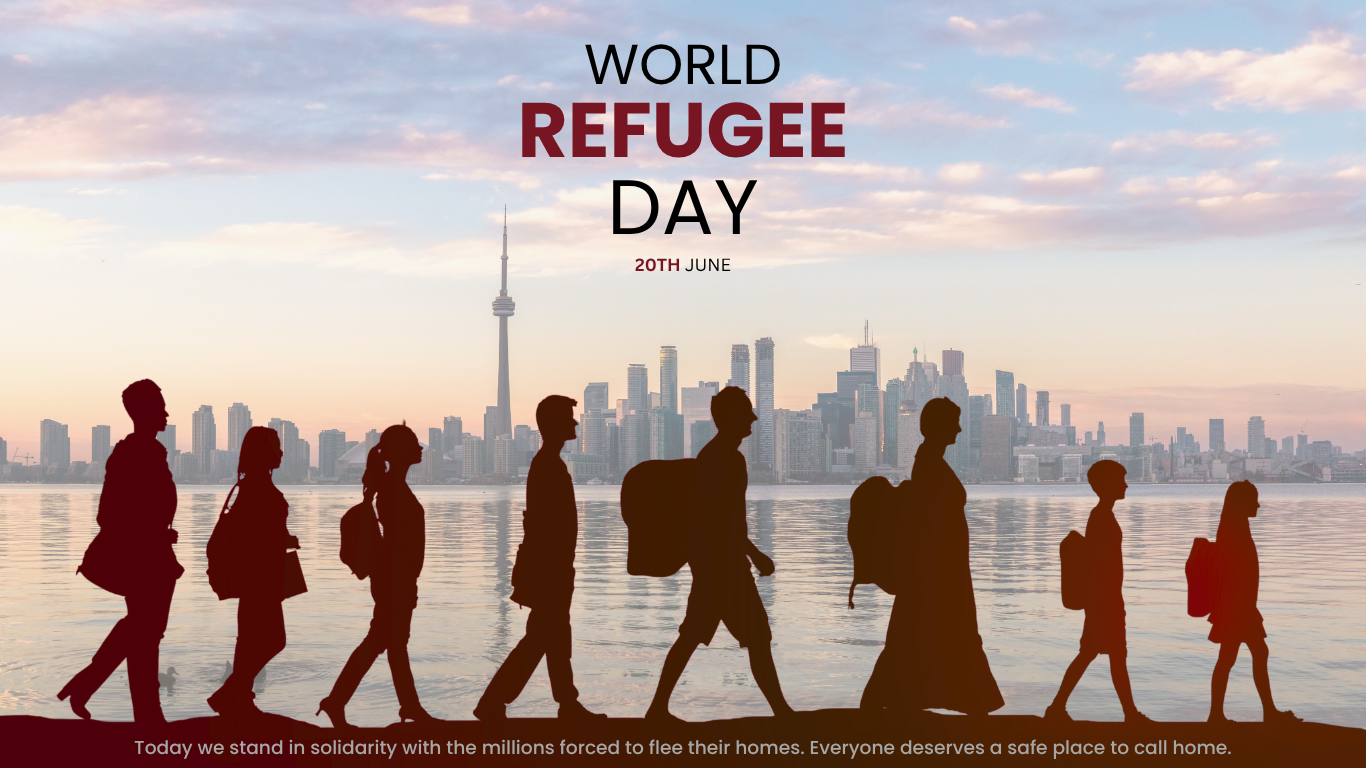
Every June 20th, we celebrate World Refugee Day to honour people who have been forced to flee their home country to escape conflict or persecution around the world. We celebrate their strength and courage, and advocate for the rights and protections that ensure they can live dignified, safe, and independent lives.
It is also an opportunity to recognize the ongoing plight of refugees whose rights and protections are not respected as global conflicts continue to forcibly displace people from their homelands. In fact, every minute, 20 people leave everything behind to escape war, persecution, or terror. In honour of this important day, we encourage you to support the Canadian Council for Refugees’ We’re Better Together campaign.
History of World Refugee Day
The first World Refugee Day was on June 20, 2001 to commemorate the 50th anniversary of the 1951 Convention relating to the Status of Refugees. It was known as African Refugee Day before the United Nations General Assembly officially designated it as an International Refugee Day in 2000.
The 1951 Convention, along with the 1967 Protocol, defines the term ‘refugee’ and outlines the rights of refugees and international standards of their treatment. Canada has been a signatory to the Convention since 1969, and its core principle is that a refugee should not be returned to a country where they face serious threats to their life or freedom. The document outlines the basic minimum standards for the treatment of refugees, including the right to housing, work, and education.
History of the 1951 Refugee Convention
In the aftermath of the First World War, people fleeing their homelands in search of refuge were first recognized as refugees by governments drafting international agreements to provide travel documents. The number of refugees dramatically increased during and after the Second World War as millions more were forcibly displaced. In response, the international community assembled a set of guidelines, laws and conventions to protect the basic human rights and treatment of refugees.
At a diplomatic conference in Geneva, the process culminated in the adoption of the 1951 Convention which brought together and expanded on previous international instruments relating to refugees. Initially, the 1951 Convention was limited to protecting European refugees from the Second World War and the 1967 Protocol expanded it to apply universally and protect all people fleeing conflict and persecution.
“We’re Better Together” Campaign
This World Refugee Day, we want to invite you to support the Canadian Council of Refugees’ “We’re Better Together” campaign and remind the Prime Minister that we are proud to live in a country that welcomes newcomers of all backgrounds.
Amid the increasing anti-immigrant and refugee movements around the world, the CCR, along with over 200 supporting organizations across the country, launched the We’re Better Together campaign. This effort intends to remind our government that we are proud to be a country that welcomes immigrants and refugees.
Sources:
https://www.un.org/en/observances/refugee-day
https://www.unhcr.org/media/1951-refugee-convention-and-1967-protocol-relating-status-refugees
https://www.unhcr.org/about-unhcr/overview/1951-refugee-convention